Aquí tienes la traducción completa del artículo al inglés:
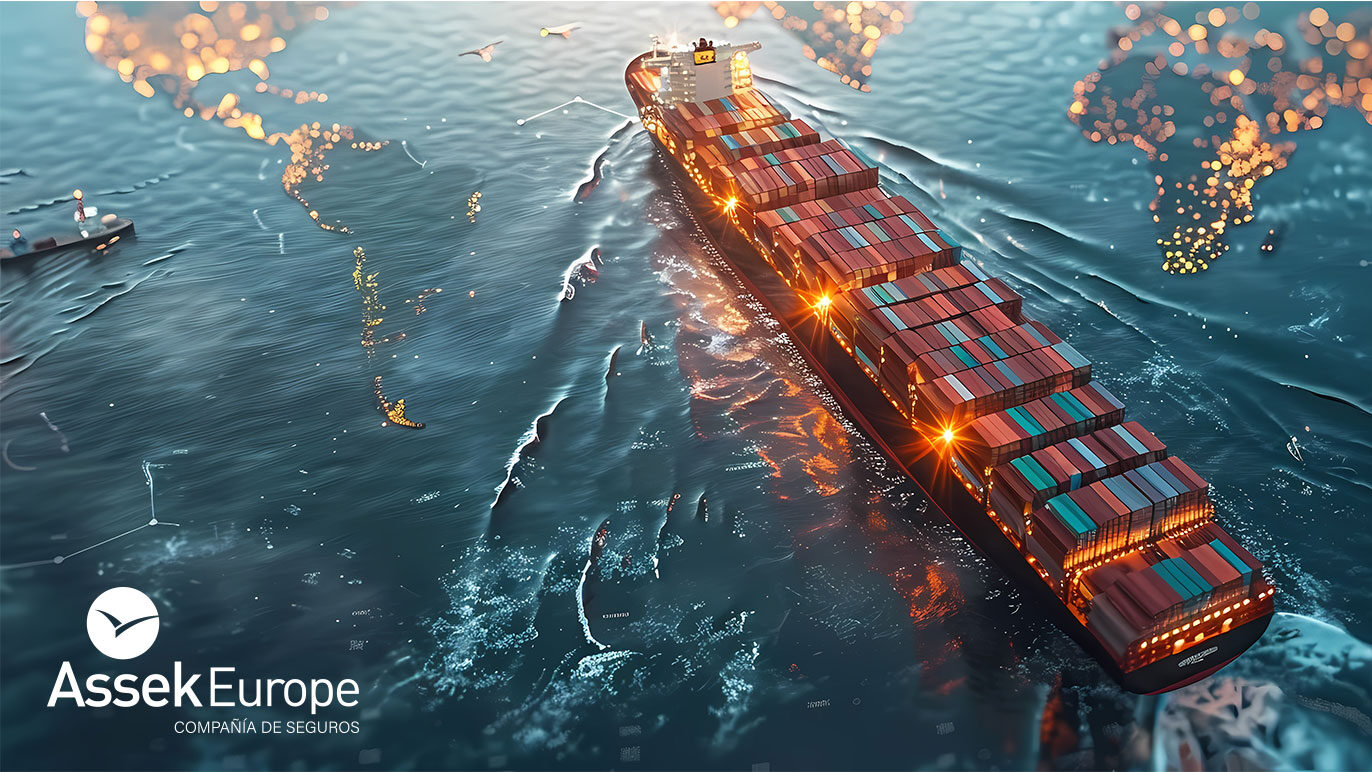
International trade and logistics are currently at a turning point. Recent geopolitical conflicts that also affect the West are reshaping transport routes, raising costs, and forcing companies to rethink their logistics strategies. The war in Ukraine, the attacks in the Red Sea, and trade tensions between the world's major economies, led by Trump, have made the transport of goods increasingly complex. In this article, we look at how these events are affecting the sector and what measures companies can take to mitigate the risks.
War in Ukraine and the Impact on European Trade
Since the start of the conflict in 2022, the war in Ukraine has been a key factor in disrupting supply chains in Europe. The Black Sea region, vital for the trade of agricultural products and raw materials, has been at the center of tensions. A maritime ceasefire mediated by the United States was recently reached, which seeks to reduce insurance costs and allow for a more stable flow of goods. However, the agreement faces challenges, as Russia demands the lifting of economic sanctions and reintegration into the SWIFT payment system to maintain its participation in global trade.
Attacks in the Red Sea and the Impact on Trade Routes
The Red Sea, one of the world's most important maritime routes, has been the scene of constant attacks by Houthi rebels amid rising tensions in the Middle East. The region, in addition to being a key point for global trade, has historically been a focal point of geopolitical disputes that go beyond the conflict between armed groups, involving the strategic interests of regional and international players such as Israel. This has forced major shipping companies to avoid the Suez Canal, a crucial route for trade between Asia and Europe. As a result, many companies have chosen to divert their routes around the Cape of Good Hope, adding between 7 and 10 days to shipping times and increasing operational costs.
According to the World Economic Forum, this crisis has directly impacted the price of maritime freight, increasing rates by more than 30% on some routes. Furthermore, transport insurance has become more costly due to the risk of attacks on the high seas.
Tension in the Strait of Gibraltar and its Relevance in Maritime Transport
In addition to the conflicts in Ukraine and the Red Sea, the United States has initiated investigations into the Strait of Gibraltar, one of the world's most congested trade routes. While the Federal Maritime Commission has officially expressed concerns about unfavorable conditions for maritime transport, including high traffic density, space restrictions, and environmental risks, other analyses suggest that the Strait is also a key passage for the military logistics of the US and its allies.
The conclusions of this investigation could lead to new regulations and restrictions, affecting the flow of goods between Europe, Africa, and America.
Trade War Between the United States and China, Mexico, Canada, and the EU
In the economic sphere, the tariff war has strongly resurfaced under the Donald Trump administration. In February 2025, the US imposed a 25% tariff on all imports from Mexico and Canada, with the exception of Canadian oil and energy, which were taxed at 10%. The measure, according to the White House, seeks to curb illegal immigration, fentanyl trafficking, and reduce the US trade deficit. In response, Canada implemented 25% tariffs on $20.6 billion in US exports, expandable to $106 billion in three weeks, while Mexico also announced economic retaliation.
Furthermore, the European Union has not been spared from this escalation. The Trump administration has proposed imposing a 25% tariff on imports from the EU, claiming that the bloc was "formed to spite the United States." Among the most imminent measures is the upcoming application of a 25% tariff on vehicles not manufactured in the US, particularly affecting the European automotive industry.
On the other hand, the trade war with China remains a critical point. The US has maintained restrictions on technology products and key raw materials, forcing companies to reconfigure their supply chains, moving operations to countries like Mexico, Vietnam, and Indonesia to avoid tariffs.
Other Regions in the Spotlight: Panama Canal and Greenland
The fragility of the Panama Canal's autonomy has also been a point of concern on the international scene. The current US administration has repeatedly expressed its interest in reinforcing its influence over the canal, which has generated concern about a possible intervention in its management. Added to this, the effects of climate change and melting ice in the Arctic are opening up new maritime routes around Greenland, a region where the strategic interests of the US and other powers have been increasing. As these routes become more viable, they could reconfigure global trade and generate new disputes over the control of these maritime passages.
General Impact on Cargo Transport
These tensions have generated investment uncertainty and affected the cost of cargo transport, forcing companies to seek alternative solutions to mitigate the impact on their operations, with these direct consequences for logistics and international trade:
Disruption of Key Routes: The closure or diversion of strategic routes has increased transport times and costs.
Increase in Operating Costs: Insurance premiums have risen due to the risks associated with conflict zones.
Need for Constant Monitoring: Companies must closely monitor affected zones and adjust their strategies to minimize the impact.
How Companies Can Mitigate These Risks
Given this scenario of uncertainty, companies in the logistics sector must take steps to protect their operations:
Diversification of Routes and Suppliers: Reducing dependence on a single route or logistics provider can minimize disruption risks.
Adapted Transport Insurance: Having specific coverage, such as war insurance or protection against delays, is key to mitigating losses.
Monitoring of Conflict Zones: Using real-time technology and data to adjust strategies based on geopolitical events.
Inventory Optimization: Reinforcing storage in strategic markets to ensure a continuous flow of goods.
As we can observe, international logistics is currently facing one of its biggest challenges in decades due to geopolitical instability. In this context, adaptability and strategic decision-making will be fundamental to guaranteeing the continuity of global trade.
At Assek Europe, we closely monitor the evolution of these conflicts to offer insurance solutions adapted to the new risks. Our goal is to provide security and trust to our clients in an increasingly volatile environment.
Contact our team of specialists to learn how to protect your cargo with the best coverage on the market.